
How to Create a Holiday Budget That Keeps Your Finances on Track
The holiday season is approaching, and for many people that means a welcome mix of gatherings, traditions, and generous gift-giving. It also often means spending more than planned -- sometimes significantly more. The result, for far too many households, is a new year that begins with financial stress and lingering credit card debt.
This year, with inflation still shaping consumer finances, building a realistic holiday budget before the season begins is one of the most valuable financial steps you can take. Here is a practical guide to help you spend meaningfully, protect your savings, and start 2027 on solid financial footing.
Why Holiday Budgeting Matters More Than Ever in 2026
Holiday spending adds up faster than most people expect. Research consistently shows the average household underestimates how much it will spend during the holiday season -- on gifts, travel, food, entertaining, decorations, and shipping. When all categories are included, total holiday costs can reach well into the thousands of dollars per household.
At the same time, financial conditions heading into the season are uneven. Inflation continues to shape everyday costs, and the personal saving rate has declined through much of 2026. Consumer research also points to a recurring pattern: actual holiday spending tends to land higher than what people initially planned, partly because shoppers encounter deals and impulse opportunities that were not part of the original budget.
The gap between what people plan to spend and what they actually spend is where holiday debt is born. A clear budget, set in advance, is the most effective way to close that gap.
Step 1: Start With a Total Number You Can Afford
The most common holiday budgeting mistake is starting with a gift list and working backward. Instead, start with a total dollar amount -- one that accounts for your current income, your existing financial obligations, and your savings goals.
Ask yourself:
- How much do I currently have available in discretionary cash -- or how much could I save over the next six to eight weeks -- that I can direct toward holiday spending without borrowing?
- What financial commitments do I have between now and the end of the year -- rent or mortgage, car payments, insurance, utilities -- that must be covered first?
- Do I have an emergency fund? Will my holiday spending leave it intact?
- Am I currently carrying any credit card balances? If so, adding new holiday charges on top of existing balances could increase the cost and timeline of paying down that debt.
Once you have a clear picture of what you can genuinely afford, that becomes your total holiday budget. Everything else flows from there.
Step 2: Break Your Budget Into Specific Categories
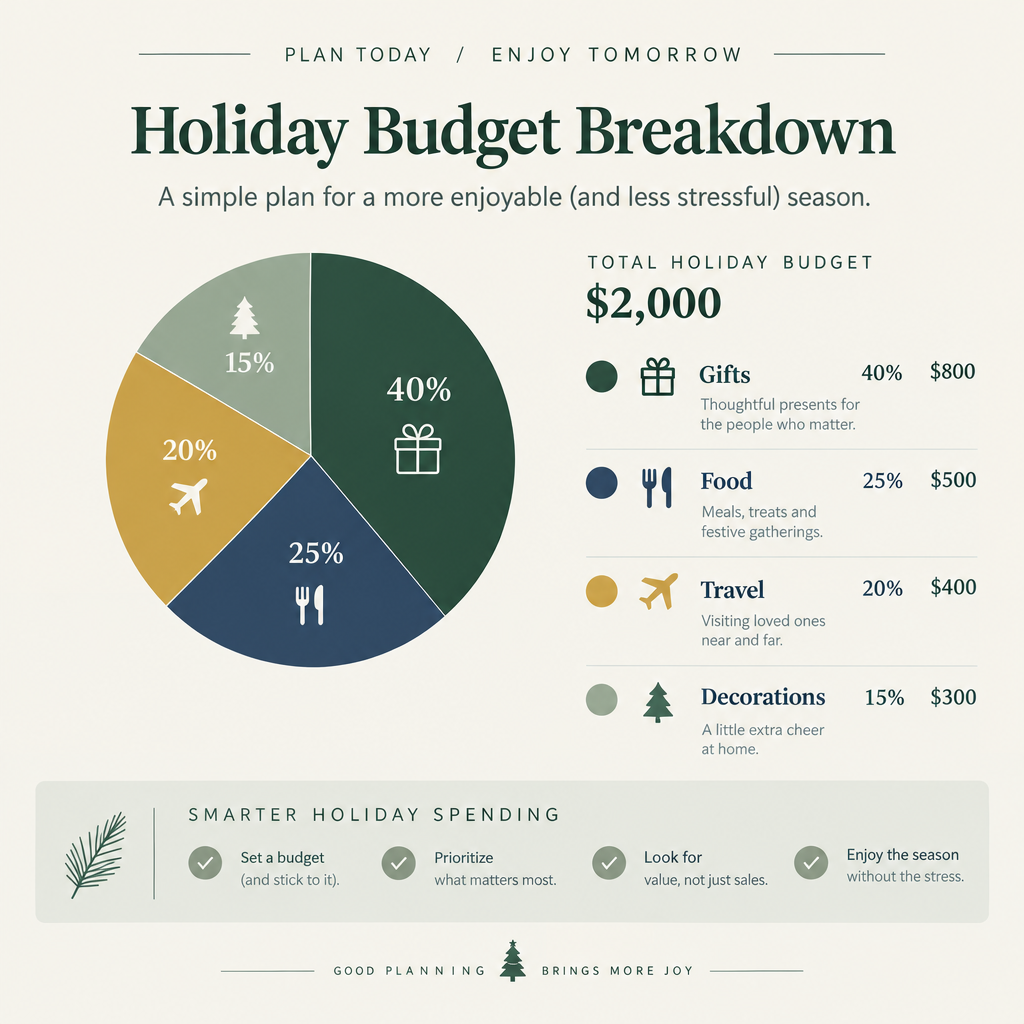
A single lump-sum number is a starting point, but it is not a usable budget. To stay in control, allocate your total across the key spending categories the season typically involves:
- Gifts -- Who are you buying for? A written list with a dollar limit per person helps prevent impulse additions.
- Food and entertaining -- Hosting holiday meals, bringing dishes to gatherings, or contributing to group celebrations all carry real costs.
- Travel -- Transportation, lodging, and related expenses if you are visiting family or friends.
- Decorations -- Seasonal decorating, if applicable. This is a category where prior-year items can stretch the budget significantly.
- Charitable giving -- If supporting causes you care about is part of your holiday tradition, build this in intentionally rather than treating it as an afterthought.
- Shipping and wrapping -- Often overlooked, these costs can add meaningfully to the total gift budget.
Allocating specific amounts per category -- even rough ranges -- makes overspending in any single area far more visible before it happens.
Step 3: Write Down Every Person on Your Gift List
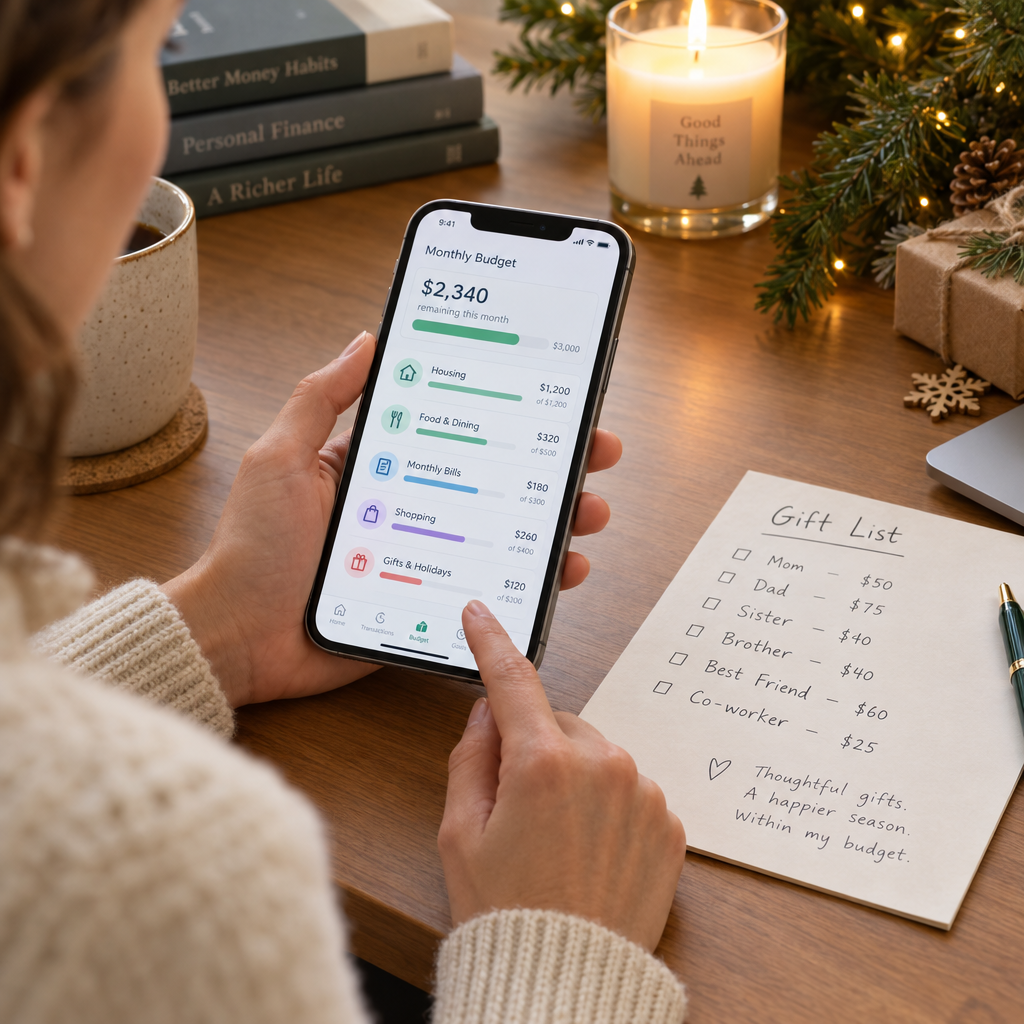
This step sounds simple, but it is where many holiday budgets quietly fall apart. List every person you plan to give a gift to -- family members, close friends, coworkers, teachers, neighbors, and anyone else -- along with a spending limit per person.
Be realistic and specific. Vague intentions like a general idea of getting something nice for someone, without a dollar amount attached, lead to in-store decisions driven by emotion rather than a plan.
Once your list is complete, total the amounts. If the total exceeds your gift allocation, you have a decision to make: adjust individual amounts, shorten the list, or consider creative alternatives -- homemade gifts, group gifts, or experience-based ideas that carry more meaning than a price tag.
Step 4: Understand How Deals Can Work Against You
One of the more counterintuitive findings from consumer research is that deal-seeking can actually increase overall spending rather than reduce it. Sales events, limited-time promotions, and buy-one-get-one offers are designed to create a sense of urgency. Buying an item you were not planning to buy -- even at a discount -- is still unplanned spending.
Before adding any sale item to your cart, ask whether it was already on your gift list and within your per-person budget. If it was not, the discount is only useful if it replaces a planned purchase at a lower price. An unexpected deal on an unplanned item is simply new spending wearing a familiar disguise.
Step 5: Choose How You Will Pay -- And Be Intentional About It
Credit cards offer convenience and often rewards, but they can also create a dangerous gap between what you spend and what you owe. The risk of the holiday season is not just overspending in the moment -- it is carrying that balance into the new year at a high interest rate, which means your holiday purchases end up costing meaningfully more than their original price.
Consider these approaches depending on your situation:
- Spending from dedicated savings: If you have built up holiday savings throughout the year, this is the ideal approach -- you are spending money you already set aside without creating new debt.
- Using a credit card you can pay in full: If you use a card for convenience or rewards, commit in advance to paying the full balance when the statement arrives. This preserves the benefit without the interest cost.
- Setting a spending ceiling within your budget: If you use a card, treat your holiday budget as the ceiling -- not the card's credit limit.
- Being cautious with buy-now, pay-later options: These services can make purchases feel smaller in the moment but add up across multiple transactions and can complicate cash flow in January and February.
Step 6: Track Spending in Real Time
Creating a budget before the season is essential. Tracking against it throughout the season is what makes it effective. Keep a running total of what you spend in each category as purchases happen -- not after the fact.
A simple spreadsheet, a notes app, or a budgeting app can all work. The method matters less than the habit. Checking your running total before each shopping trip or online session gives you a clear, current picture of where you stand and how much room you have remaining in each category.
Step 7: Plan for What Comes After the Holidays
January is when the full financial picture of the holiday season becomes clear. Returns, final shipping charges, and credit card statements all arrive together. Planning ahead can smooth the transition:
- Know your credit card payment due dates in January before the season ends.
- If you do carry any holiday charges on a card, have a clear payoff plan -- ideally within one to two billing cycles.
- Consider setting up an automatic monthly transfer to a dedicated holiday savings account starting in January, so that next year's holiday season is funded gradually throughout the year rather than absorbed all at once in the fall.
The Bigger Picture: Holiday Spending and Your Long-Term Financial Goals
The holidays are one meaningful season within a full year of financial decisions. A well-managed holiday budget protects not just your December finances, but your ability to fund contributions to retirement accounts, maintain your emergency fund, and stay on track toward longer-term goals -- whether that is a home purchase, a family milestone, or building lasting financial security.
Spending thoughtfully during the holidays is not about spending less on the people you care about. It is about spending in a way that does not undermine the financial stability that ultimately allows you to support and provide for those same people throughout the year.
A Practical Summary: Your Holiday Budget Checklist
- Determine a total holiday budget you can fund without borrowing
- Break the total into categories: gifts, food, travel, decorations, shipping, charitable giving
- Write a complete gift list with a dollar limit per person
- Compare your list total to your gift category allocation and adjust if needed
- Decide how you will pay and commit to that approach before you begin shopping
- Track your spending in real time throughout the season
- Plan for January -- know your payment due dates and have a payoff plan ready
- Set up a 2027 holiday savings contribution starting in January
Ready to Build a Budget That Works Year-Round?
A holiday budget is one piece of a broader financial picture. If you would like to build stronger budgeting habits, manage cash flow more effectively, or connect your day-to-day spending decisions to longer-term wealth and planning goals, Eden Advisory Services offers Budget Counseling and Wealth Planning services designed to help you gain clarity and confidence at every stage.
Financial decisions are rarely one-size-fits-all. If you would like to talk through how these considerations fit into your broader financial goals, schedule a consultation with Eden Advisory Services. We would be glad to help.
This article is for general educational purposes and should not be considered individualized investment, tax, or legal advice. Financial decisions should be evaluated based on your individual circumstances and, when appropriate, with qualified financial, tax, or legal professionals.